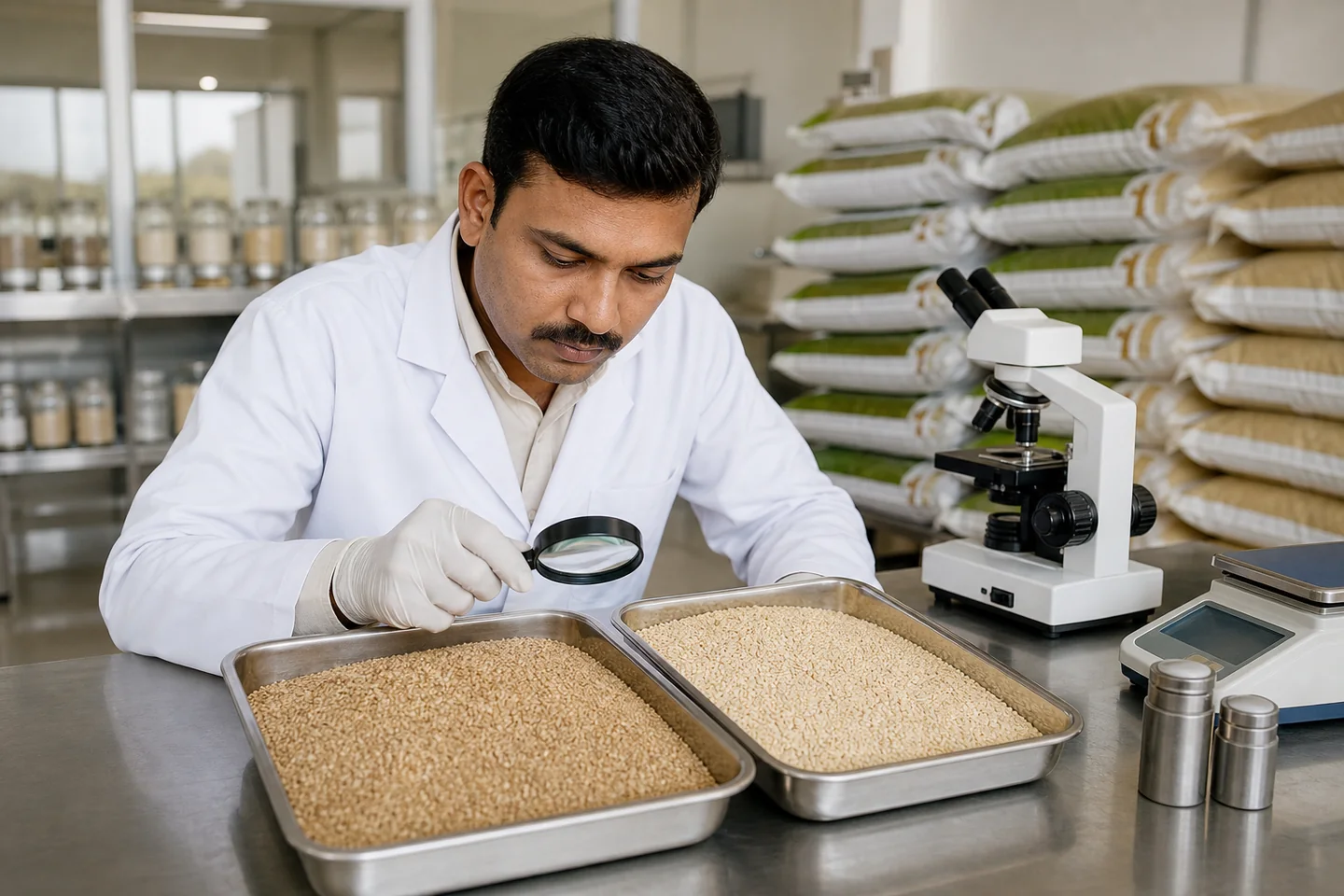
Sesame offers can look similar while differing materially in purity, colour, microbiology and processing suitability. A precise specification protects the buyer far better than ordering only by the words “natural” or “hulled.”
Choose the grade around its end use
Natural sesame retains its outer hull. Hulled sesame has the hull removed, but the supplier should declare the actual hulling process and any microbial-reduction treatment. Intended uses vary by buyer process, so the purchase order should define performance and safety requirements rather than assume them from the grade name.
| Decision | Natural sesame | Hulled sesame |
|---|---|---|
| Hull status | Hull retained | Hull removed by declared process |
| Key appearance evidence | Colour, purity, damaged seed and approved sample | Colour, residual hull, wholeness and approved sample |
| Process evidence | Cleaning and any treatment declared | Hulling method and any treatment declared |
| Safety evidence | Sesame-allergen controls plus lot-specific microbiology, residue and contaminant evidence as contracted | |
| Specification | Buyer question | Commercial effect |
|---|---|---|
| Purity | What minimum percentage and test method apply? | Controls foreign material and usable yield |
| Colour | Natural, white, sortex-cleaned or colour range? | Affects finished-product appearance |
| Moisture | What maximum applies at loading? | Influences storage and caking risk |
| Microbiology | What limits and sampling plan apply? | Supports destination and customer requirements |
| Oil content | Is a minimum needed for crushing? | Changes processing value |
Microbiology, allergen and residue planning
The Codex low-moisture-food code includes sesame: Salmonella may survive even when it cannot grow, so dry-product hygiene and any pathogen-reduction step must be declared. Define the organism, limit, sample size, laboratory method and responsibility for retesting. Sesame is also listed in EU Regulation 1169/2011 Annex II; agree declaration, segregation and cross-contact controls for the destination. Pesticide residue requirements should be matched to that market because acceptable limits are not universal.
Do not assume a certificate from a previous lot proves the current cargo. Reports should identify the actual lot, test date, method and laboratory. Where risk or contract value warrants it, arrange independent sampling before loading.
Details to put in the purchase order
- Natural or hulled grade and intended end use.
- Minimum purity and maximum moisture.
- Colour, damaged seed and foreign-matter tolerances.
- Microbiological, pesticide and contaminant requirements.
- Bag type, liner, net weight, marking and pallet policy.
- Inspection, sampling, sealing and document responsibilities.
Packing and shelf-life controls
Sesame is commonly shipped in lined food-grade bags. Packaging should limit moisture entry, withstand stacking and carry traceable lot markings. Before loading, check container odour, previous-cargo risk, water ingress, floor condition and door seals. Desiccants may support moisture management but do not replace dry cargo and a sound container.
Comparing supplier offers
First align the grade, purity, test scope, packing, Incoterm and destination. Then compare the total landed proposition. A quotation that includes destination-specific testing and robust packing may carry more value than a lower offer with vague quality language.
Buyer note
Import restrictions and food-safety controls change by origin, product and destination. Reconfirm the current rules with the competent authority and your customs or food-safety adviser before shipment.