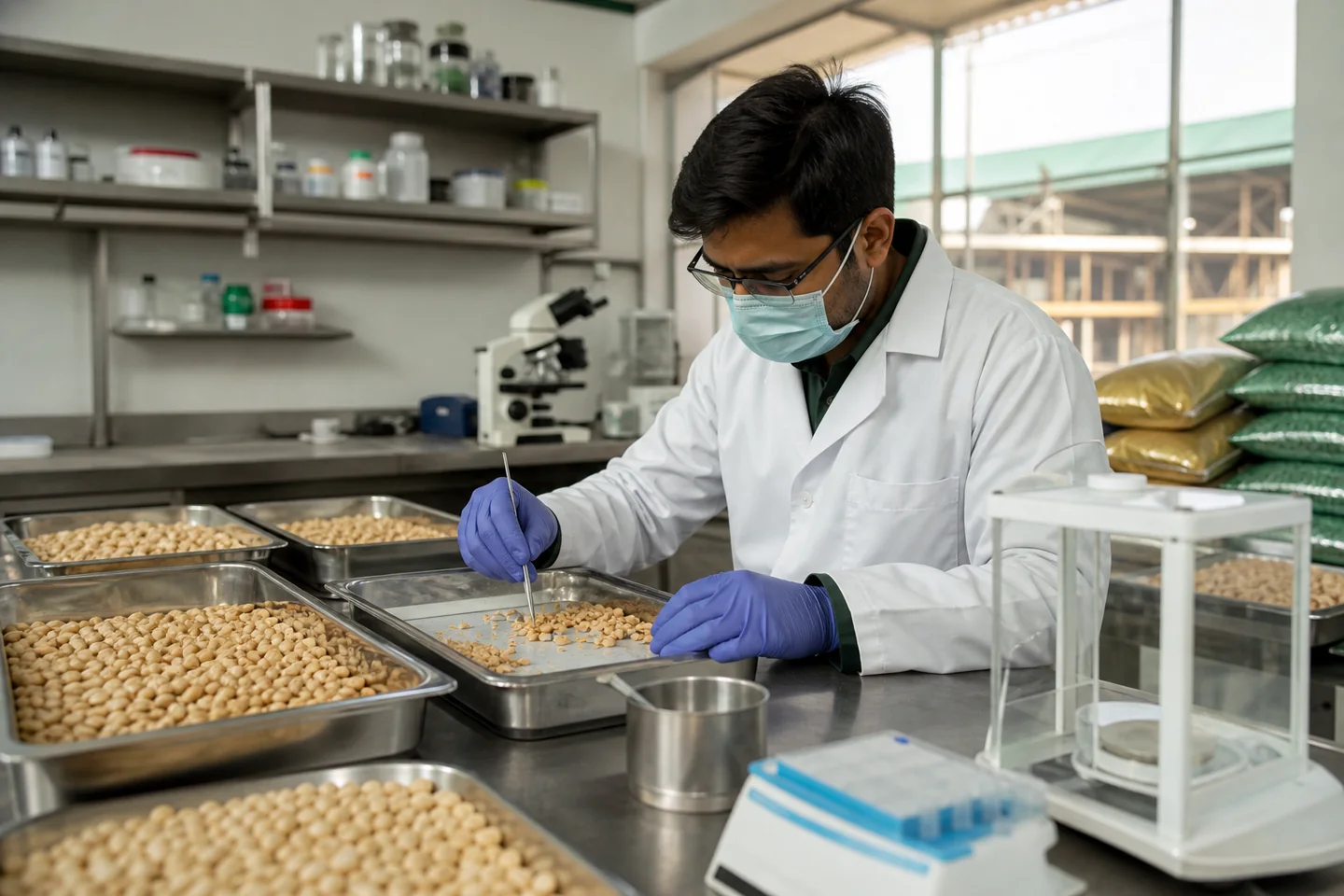
A successful peanut contract starts with more than a count size and a price. Buyers should define variety, moisture, damaged kernels, aflatoxin limits, microbiological requirements, packing and the exact inspection method before approving a shipment.
Java, Bold and blanched peanuts
Java and Bold are commercial labels, not complete or universally defined grades. Do not assume count, shape or performance from the name: require measured lot data and an approved sample. Blanched peanuts have the skin removed and require a separate process, microbiology and appearance specification.
Count descriptions such as 40/50 or 50/60 commonly refer to kernels per ounce, but the contract must state the unit, counting method and permitted tolerance. Also declare whether the cargo is ready to eat or requires further processing.
| Decision | What to state | Why it matters |
|---|---|---|
| Kernel type | Java, Bold or blanched | Controls appearance and processing suitability |
| Count | Named count plus tolerance | Prevents mixed-size delivery disputes |
| Moisture | Maximum percentage at loading | Supports storage stability |
| Defects | Damaged, split, shrivelled and foreign matter limits | Defines usable yield |
| Food safety | Destination-specific aflatoxin and microbiology limits | Supports border and customer compliance |
Treat aflatoxin as a contract item
The revised Codex peanut aflatoxin code, CXC 55-2004, emphasizes prevention across harvest, drying, storage, sorting and processing. Aflatoxin risk cannot be assessed from appearance alone. State the destination limit for B1 and/or total aflatoxins, representative sampling plan, validated method, competent laboratory, testing point and lot identity.
APEDA operates Peanut.NET for testing, certification and traceability in Indian peanut exports. Verify certificate scope, batch identity and destination requirements; registration or a report from another lot does not prove the cargo.
Pre-shipment buyer checklist
- Approve a sealed reference sample and keep a counter-sample.
- Write the laboratory limits and test method into the purchase contract.
- Confirm crop year, origin, count, moisture and defect tolerances.
- Inspect bag condition, container cleanliness and desiccant plan.
- Match lot numbers across packing list, test report and inspection record.
Packing and container planning
Bulk and retail packing availability must be confirmed in the quotation. Define bag construction, liner, net weight, closure, lot marks and pallet policy; buyer-marked packs additionally need artwork, legal-label and line-capability approval. The selected pack must protect the lot through the agreed warehouse and distribution conditions.
Container loading should be documented with photographs showing the empty container, floor and wall condition, bag arrangement, seal application and final door closure. If independent inspection is required, name its scope in the contract; “inspection included” is too vague.
Release the shipment against matched evidence
| Release item | Evidence to match |
|---|---|
| Identity and grade | Lot, Java/Bold/blanched label, measured count, defects and approved sample |
| Aflatoxins | Applicable B1/total limit, sampling plan, method, laboratory and lot-linked report |
| Use status | Ready-to-eat or destined for further processing, with required treatment declared |
| Packing and loading | Bag/liner approval, container inspection, loading record and seal number |
| Documents | Matching lot, weights, dates, consignee and certificate scope |
Codex states that export-grade peanuts should be labelled as ready to eat or destined for further processing. Put that status in the specification and accompanying documents rather than assuming the buyer will apply another safety step.
How to compare two peanut quotations
Normalize both offers to the same Incoterm, port, count, crop year, specification and packing. A lower headline price can become more expensive after adding inspection, testing, stronger packing or destination charges. Ask each exporter to state exclusions and offer validity clearly.
Important
Food-safety limits and import controls can change. Confirm current requirements with your importer, competent authority and laboratory before contracting. This guide is procurement information, not regulatory advice.