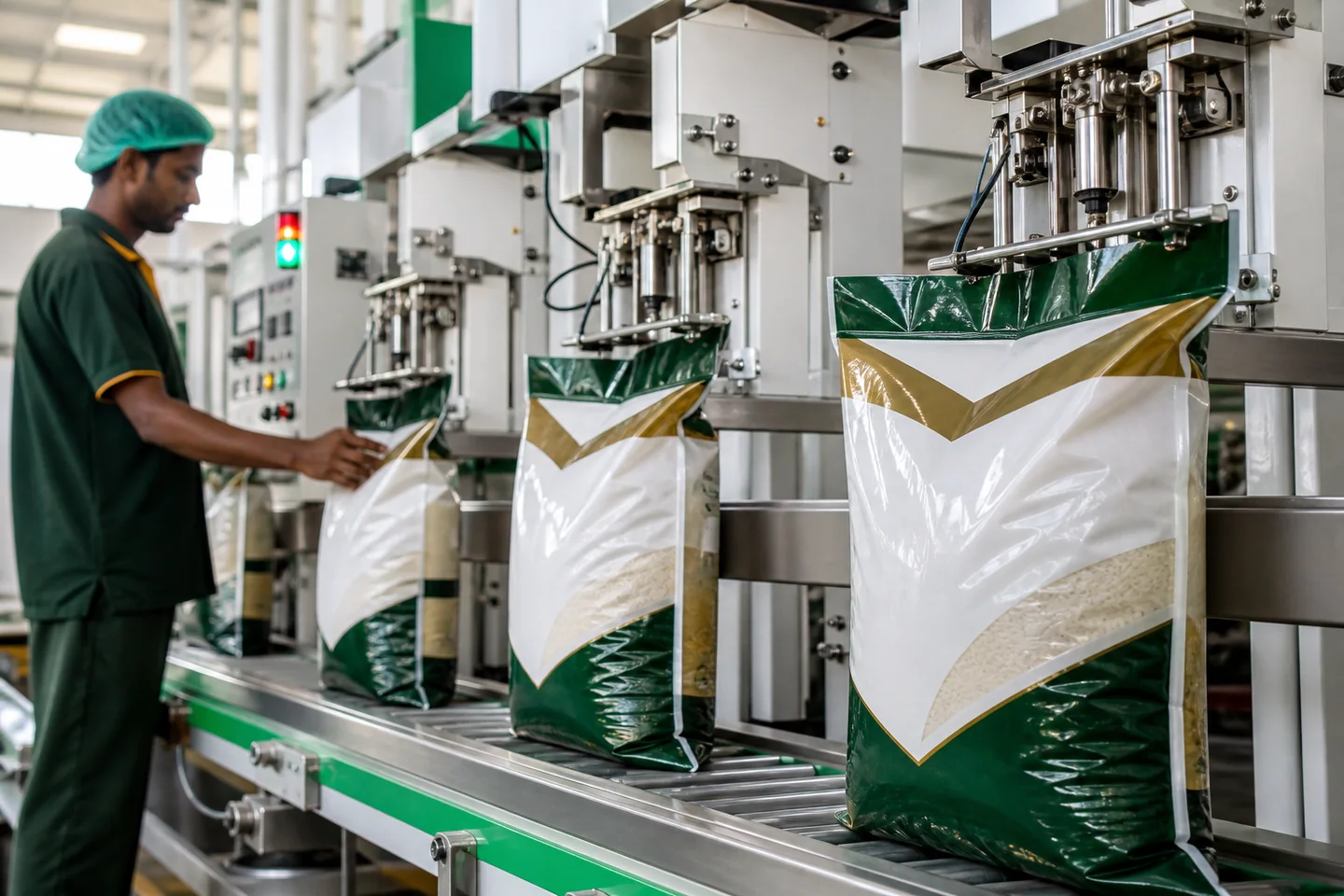
Private label is not simply placing a logo on a rice bag. The buyer must align grain, cooking result, pack performance, destination labelling and production controls so every shipment delivers the same consumer promise.
Start with a one-page product brief
Define the target customer, retail price position, destination, pack sizes and sales channel. Then select a rice variety that supports the promise. Premium elongation may suit an upscale food-service or retail line, while value-focused markets may prioritize consistency, cooking yield and landed cost.
| Workstream | Buyer approval | Supplier evidence |
|---|---|---|
| Rice | Variety, process, age and cooking result | Specification, sample and test report |
| Pack | Material, size, handle, closure and barrier | Blank-pack sample and material details |
| Artwork | Brand, claims, language and legal copy | Print proof and final dieline |
| Production | Tolerance and release criteria | Batch record, weight checks and photos |
| Shipment | Carton, pallet and container plan | Packing list, seal and loading record |
Choose packaging for the route, not only the shelf
Common formats include laminated pouches, woven polypropylene bags, non-woven bags and premium BOPP presentation packs. The correct structure depends on pack weight, expected shelf life, humidity, handling and local recycling rules. Test filled bags for seam strength, drop performance, print rub and stacking before mass production.
Pack dimensions also affect container utilization. An attractive shape that creates excessive void space can raise landed cost. Ask for a loading plan using the final packed dimensions, not a generic capacity estimate.
Build a controlled artwork process
The importer normally owns approval of trademarks, claims, nutrition panels, importer details, language and destination labelling. Use numbered artwork versions, record written approval and do not rely on messaging-app screenshots as the final production proof. A printed colour proof is useful because screen colours do not predict every packaging substrate.
Artwork release checklist
- Trademark and brand ownership confirmed.
- Product name and rice variety match the contract.
- Net quantity, origin and importer information verified.
- Cooking instructions and language reviewed locally.
- Lot, packing date, best-before and barcode zones reserved.
- Final dieline signed with a version number and date.
Control what happens inside the bag
Keep a sealed pre-production grain sample and a sealed finished-pack sample. During packing, document net-weight checks, seal quality, coding, metal detection where applicable and random finished-bag inspection. The contract should specify permitted blend or variety changes; silent substitution can damage a brand even when the replacement grain is commercially acceptable.
Plan samples, print and production in sequence
A sensible workflow is grain approval, blank packaging test, artwork approval, printed-pack proof, pilot fill and then commercial production. Minimum quantities depend on printing process, bag format and rice volume, so ask separately for packaging MOQ and commodity MOQ. Also agree who owns unused printed material if forecasts change.
Trust-building practice
Approve the physical product and the physical pack independently. A beautiful pack cannot correct the wrong rice, and excellent rice can still fail in weak packaging.