Eagle and Scooter are commercial trade descriptions, not complete specifications. Importers should translate the requested grade into measurable requirements for colour, splits, purity, moisture, volatile oil, residues and packing.
What Eagle and Scooter Actually Verify
Neither Eagle nor Scooter is defined as a universal grade in the cited FSSAI or Spices Board sources. Treat both as supplier-specific quote labels until the seller provides measurable limits and a representative sample.
| Trade term | Verified from the name alone | Required contract evidence |
|---|---|---|
| Eagle | No universal official size, split, purity or colour limit | Supplier specification, sieve distribution, split limit, purity limit and sealed sample |
| Scooter | No universal official size, split, purity or colour limit | Supplier specification, sieve distribution, split limit, purity limit and sealed sample |
| Either term | No residue, microbiology or destination-compliance guarantee | Destination test panel, lot-specific certificate of analysis and agreed inspection method |
Compare offers field by field: split or broken percentage, purity and foreign matter, approved colour range, sieve profile, moisture, volatile oil where relevant, treatment status and packing. The trade name can remain on the RFQ, but the measurable fields must control acceptance.
Use a sealed approval sample
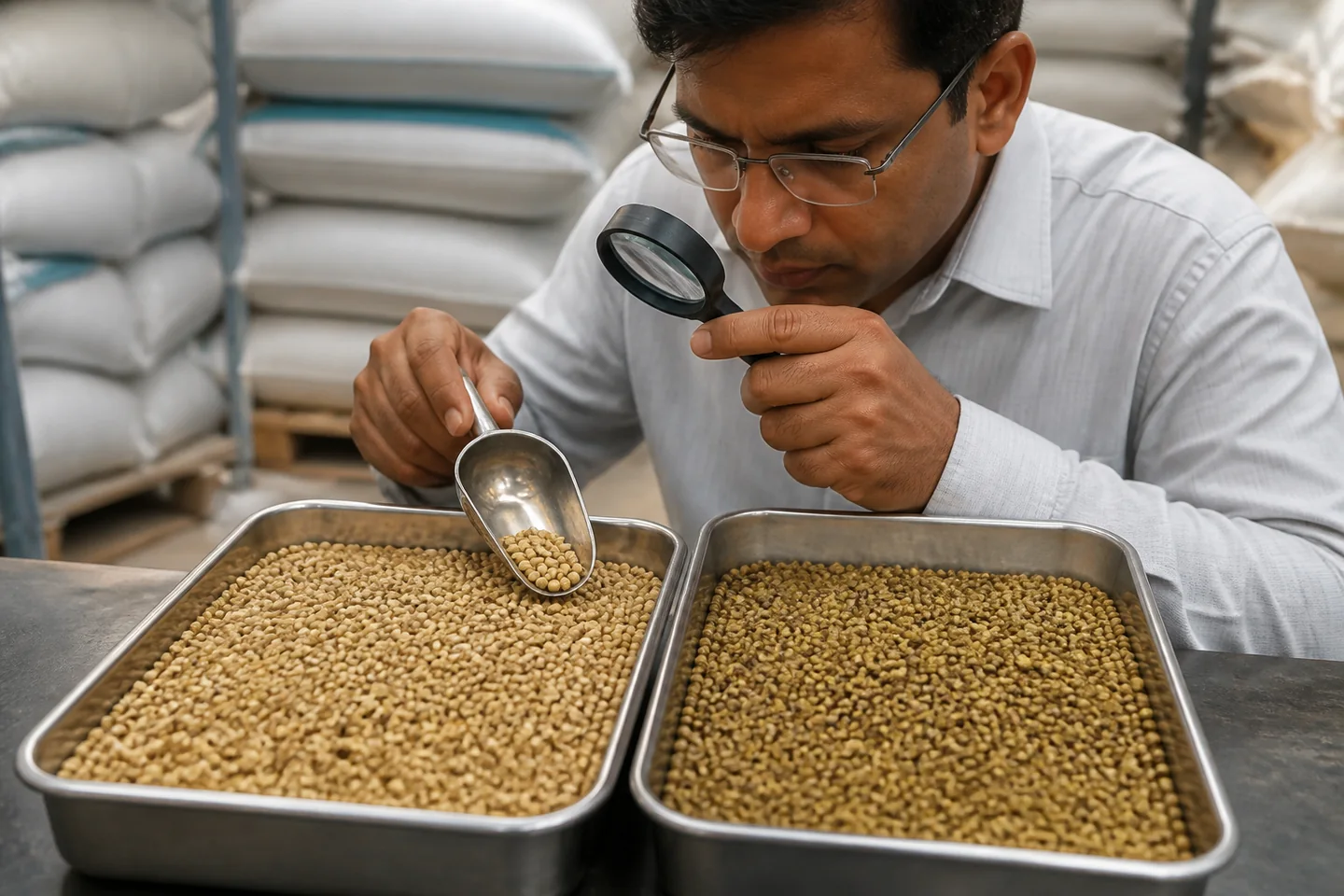
Ask for a representative sample from the offered lot or crop position, not a hand-selected display sample. After approval, seal and sign two matching samples: one retained by the buyer and one by the supplier. The contract should say whether final inspection is based on visual comparison, laboratory results or both.
For ground coriander, add mesh size, microbiology, adulteration controls and treatment status. Whole-seed and powder specifications should not be treated as interchangeable.
Testing and destination compliance
The FSSAI standards for spices and condiments define origin-market requirements, while Spices Board India lists quality and testing resources for exports. Buyers must also provide destination-specific residue and contaminant limits because an origin report may not cover every importing-country requirement. Review the Spices Board quality information and confirm the final panel with an accredited laboratory.
Before confirming the order
- State whole seed or powder and intended application.
- Approve grade, colour, crop and split tolerance.
- Define purity, moisture and volatile-oil requirements.
- List pesticide, contaminant and microbiology tests.
- Agree bag, liner, net weight, lot marking and inspection scope.
Packing and arrival quality
Lined food-grade bags are common for bulk coriander. The container must be dry, odour-free and suitable for food cargo. Loading photographs, lot markings and seal records create a simple evidence trail. On arrival, compare the lot with the retained sample before mixing it into production stock.
Practical rule
Do not buy a trade name. Buy a written specification, an approved sample and a defined inspection process. Use the purchase specification guide to structure the RFQ.